The PillowBrief guide
Memory foam pillow for neck pain: how to choose
Memory foam is often recommended for neck pain, but the height and shape matter more than the material. Learn what to check, when foam can make pain worse, and how to choose and test a pillow for neck support.
PillowBrief shares ownership with some stores we mention. Read our disclosure.
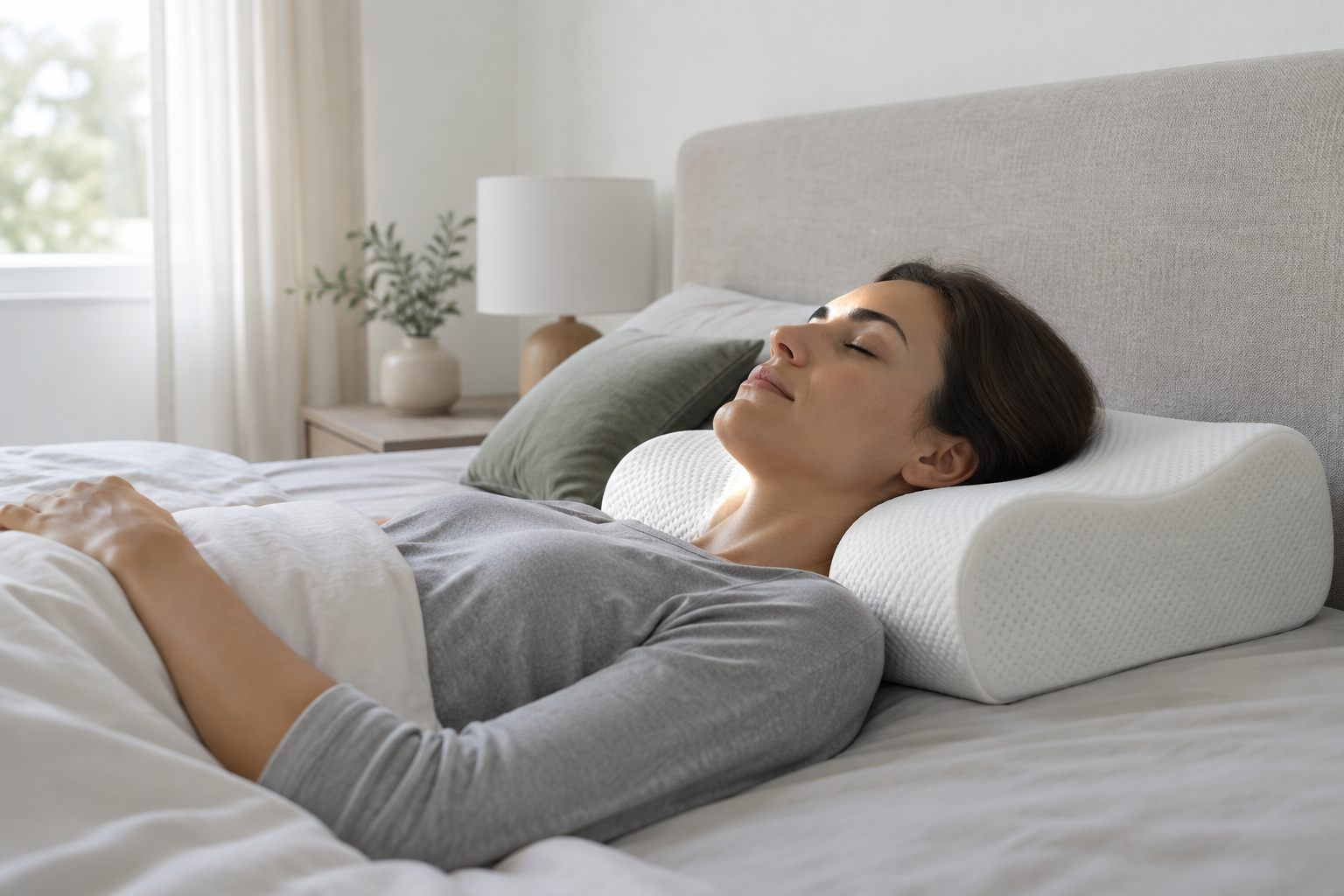
Neck pain is one of the most common reasons people replace a pillow, and memory foam is one of the most common answers. The logic sounds solid: foam contours to the body and supports the neck. But a pillow is not a treatment, and the wrong foam pillow can leave your neck more strained, not less.
This guide explains what memory foam realistically offers, what actually determines whether a pillow supports your neck, when foam can make things worse, and how to choose and test one sensibly.
What memory foam does, and what it does not
Memory foam is a slow-recovering foam that softens with body heat and returns to shape after you move. It can provide even, steady support and may reduce pressure points compared with a firmer springy fill. For some sleepers that translates into less tossing and a more comfortable night.
What it does not do is fix a neck problem. No pillow has been shown to treat the causes of neck pain, and buying one is not a substitute for assessment if the pain persists or comes with other symptoms.
The height matters more than the material
A pillow supports your neck when it keeps your head in line with the rest of your spine. If it is too high, your neck bends up; too low, and it drops. Either way the muscles work against the position all night. This is why two people can buy the “same” memory foam pillow and have opposite experiences.
Three things decide the right height:
- Your sleeping position. Back sleepers usually need less loft, side sleepers more to fill the gap above the shoulder, and stomach sleepers the least.
- Your mattress. A soft mattress lets the shoulder sink, which changes how much space the pillow must fill. A firm one changes it again.
- Compression. Foam softens and flattens under your head. Judge the height after your head has settled into it, not when it is fresh out of the box.
Firmness, shape and heat
Beyond height, check the shape and feel:
- Contoured pillows have a dip for the head and a raised edge for the neck. Look at the dimensions and whether the shape suits your proportions rather than trusting the word “ergonomic”.
- Solid memory foam keeps a defined shape but cannot be reshaped; shredded or adjustable fill lets you add or remove material to tune the height.
- Foam tends to sleep warmer than down or loose fibres because it holds heat and blocks airflow. If you run hot, that may matter as much as the support.
Care also differs. Solid memory foam usually should not be machine washed or submerged, while a removable cover often can be. Read the label before you commit.
When a foam pillow can make neck pain worse
A memory foam pillow can add to neck discomfort when it:
- Holds your head higher or lower than your spine, so the neck stays bent.
- Is firm enough to resist your head settling into a comfortable position.
- Has a contour that does not match your shoulder width or sleeping position.
- Traps heat that keeps you shifting and re-straining the neck.
If a pillow repeatedly leaves you stiff, sore or waking to reposition, that is information. Stop using it and reconsider the height and shape rather than persisting.
A sensible way to choose and test
Work in a clear order. First decide your dominant sleeping position and measure the height you seem to need on your own mattress. Then choose a pillow whose compressed height and shape match, preferring an adjustable design if you are unsure. Finally, test it while keeping the rest of your setup unchanged.
Do not treat a pillow as a cure. The NHS advises seeking medical help for neck pain that persists, keeps returning, or comes with symptoms such as numbness, pins and needles, or weakness in the arms or hands. Comfortable bedding and clinical assessment solve different problems.
Options to compare in one catalogue
There is no single memory foam pillow that suits every neck. Calm Eden, which shares our owner, lists a few options you can measure against the checklist above:
- MendT Cervical Neck Pain Pillow — a contoured design to check against your shoulder width and sleeping position.
- HaloT Neck & Shoulder Relief Pillow — a contoured support option to compare for height and shape.
- FlexT Shredded Foam Adjustable Pillow — removable fill so you can tune the compressed height as you test.
These are examples to run the questions against, not endorsed winners or medical devices. Confirm the current dimensions, firmness, care and return terms before buying, and use the loft guide and firmness guide to compare them.
Common questions
Is memory foam good for neck pain?
Memory foam can provide steady support and spread pressure, which some people find comfortable at night. But the material is not what helps or hurts by itself. What matters is the pillow's height after your head compresses it, its firmness, and whether its shape matches your sleeping position and mattress. If it holds your head too high or too low, it can add strain.
What pillow height is best for neck pain?
You want your head roughly level with the rest of your spine, not tipped up or down. Back sleepers usually need a lower loft, side sleepers a higher one that fills the shoulder gap, and stomach sleepers the least of all. Measure height after compression, on your own mattress, rather than the loft printed on the box.
Can memory foam make neck pain worse?
Yes. A memory foam pillow that is too high, too firm or the wrong shape for your position can push the head out of alignment and add tension. Solid foam also traps more heat and cannot be reshaped like shredded fill. If a pillow consistently leaves you stiff or sore, stop using it and reassess the height and your sleeping position.
How do I test a memory foam pillow for neck support?
Keep your mattress, bedding and routine consistent, use the pillow as intended, and note how your neck feels at bedtime and in the morning. Give it a fair trial that still respects the return window, and stop if discomfort gets worse. Adjustable or shredded-foam designs let you add or remove fill to tune the height while you test.
Sources & further reading
Sources inform the guide. They do not endorse PillowBrief or the products linked here.
Something changed or needs correcting? Tell us. This is consumer information, not individual medical advice.